
have we forgotten the gospel By Stella Ashworth
The Church was never called to build its own kingdom, promote its own name or create endless movements. It was called to proclaim Jesus Christ.
There is something we need to stop and ask ourselves: What is the Church actually here for? What is the Bible about?
From Genesis to Revelation, the central message of Scripture points us to God's redemptive plan through Jesus Christ.
The Old Testament points forward to the promised Messiah. The Gospels reveal the life, death and resurrection of Jesus. The book of Acts records how His disciples carried that message into the world. The Epistles teach believers how to live in the light of the Gospel, and Revelation points us towards the return and ultimate victory of Christ.
It has always been about Jesus. Yet, somewhere along the way, have we become so occupied with building our own religious structures, movements, ministries and platforms that we have lost sight of the very message we were commissioned to carry?
The early Church understood the assignment
Consider Peter and the early disciples. After the resurrection of Jesus and the outpouring of the Holy Spirit at Pentecost, Peter stood before the crowds and proclaimed Christ. He did not preach his own greatness. He did not establish a personal movement or invite people to become followers of his brand. He preached Jesus — crucified, risen and exalted.
In Acts 2, Peter called the people to repent and be baptised in the name of Jesus Christ for the forgiveness of their sins. About three thousand people received his message and were baptised that day.
What followed?
They devoted themselves to the apostles' teaching, fellowship, the breaking of bread and prayer (Acts 2:42). They shared with one another, cared for those in need and continued proclaiming the Gospel. The message spread.
In Acts 4:12, Peter boldly declared that salvation is found in no one else, for there is no other name under Heaven given to mankind by which we must be saved. That was the message. That was their purpose. That was their commission. The disciples were not instructed to establish competing versions of Christianity. They were sent to make disciples of Jesus Christ.
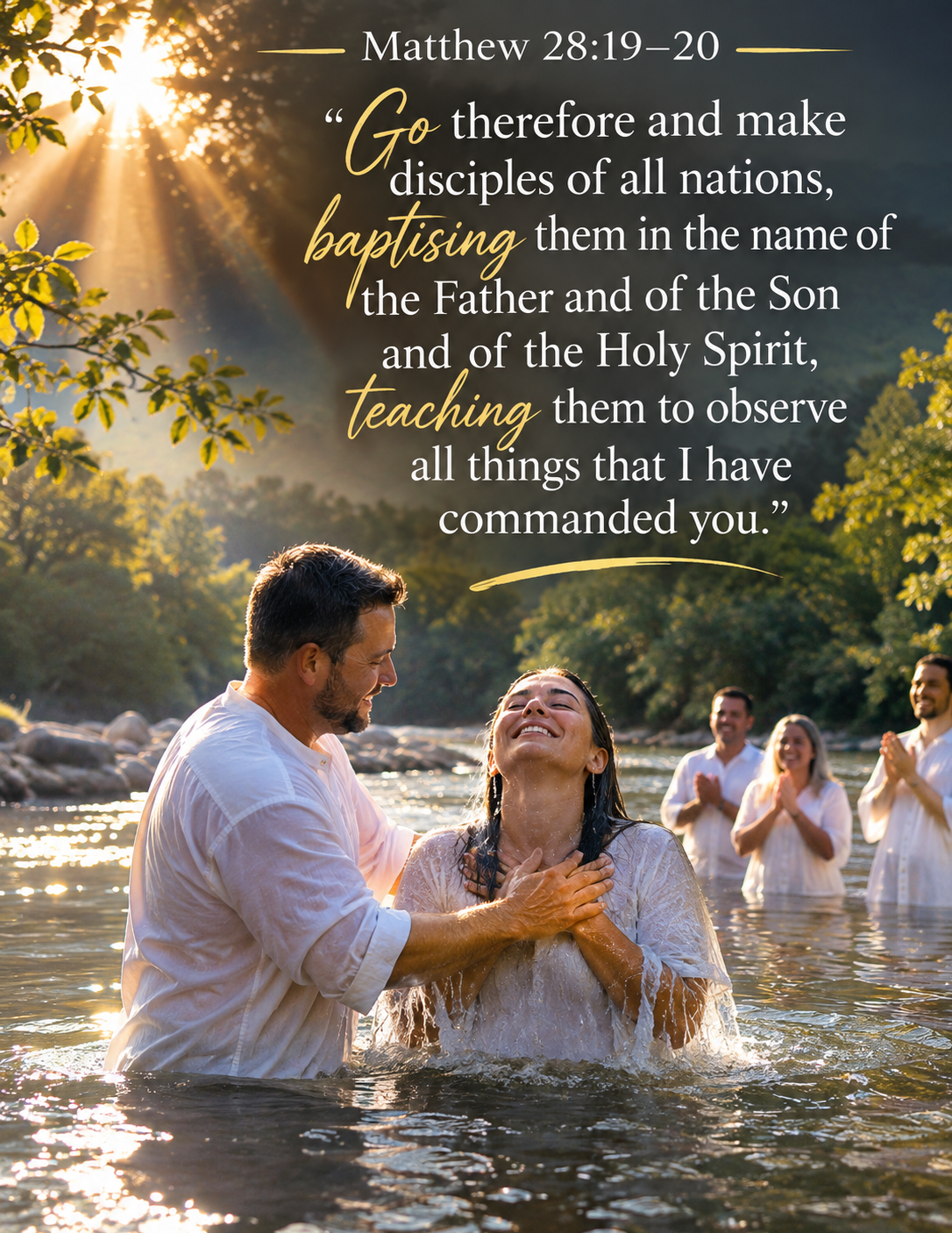
And this is precisely what Jesus commanded in Matthew 28:19–20: "Go therefore and make disciples of all the nations, baptising them in the name of the Father and of the Son and of the Holy Spirit, teaching them to observe all things that I have commanded you." Notice something important: Jesus did not say, go and make disciples of yourselves. He did not say, build your own kingdoms, establish your own religious empires or make people dependent on your ministry. He said, make disciples. Disciples of Christ.
When did the mission become about us?
Why are we so eager to preach ourselves instead of Christ? Why do we see so much competition between ministries, churches and Christian movements? Why do we fight over theological differences to the point where believers become divided, relationships are destroyed and the Gospel gets lost in the arguments? Why are we so occupied with promoting personalities, building platforms and creating business upon business within the Church, while so many people outside the Church have never truly heard the Gospel?
There is nothing inherently wrong with Christian businesses, ministries, organisations or people earning an honest living. There is nothing wrong with sound theological discussion. Scripture calls us to teach sound doctrine and to contend for the faith. But when our ambitions, platforms, financial interests and personal identities become more important than Christ, we need to examine our hearts.
Paul addressed this very issue in 2 Corinthians 4:5: "For we preach not ourselves, but Christ Jesus the Lord; and ourselves your servants for Jesus' sake." That should still be the heartbeat of every preacher, teacher, pastor, ministry leader and believer.
We preach Christ. We serve one another. We point people towards Him. The Church does not need another personality to follow. The world needs to encounter Jesus.
Have we created our own religion and called it biblical?
We must also be careful not to place human traditions, religious practices and personal interpretations on the same level as God's Word. Over the centuries, people have developed different traditions, celebrations, movements and religious systems. Some may be meaningful expressions of faith, while others may go beyond what Scripture teaches.
But we must ask: Where does the Bible actually draw the line? Colossians 2:16 -17 warns believers not to allow others to judge them regarding food, drink, festivals, New Moons or Sabbaths, explaining that these were a shadow of things to come, but the substance belongs to Christ.
Galatians 4:10 –11 also expresses Paul's concern about believers becoming enslaved to religious observances. This does not mean that remembering biblical events or celebrating the goodness of God is wrong. It means that we must never turn human traditions into conditions for salvation, measures of spiritual superiority or commandments that God Himself has not given.
We must not take something we have created, attach God's name to it and demand that others follow it as though it were His command.
The Lord's Supper, for example, was instituted by Jesus Himself (Luke 22:19–20; 1 Corinthians 11:23–26). We must distinguish between what Christ commanded and what people have established through tradition. Our authority must remain Scripture, not our own religious inventions.
His Kingdom is not of this world
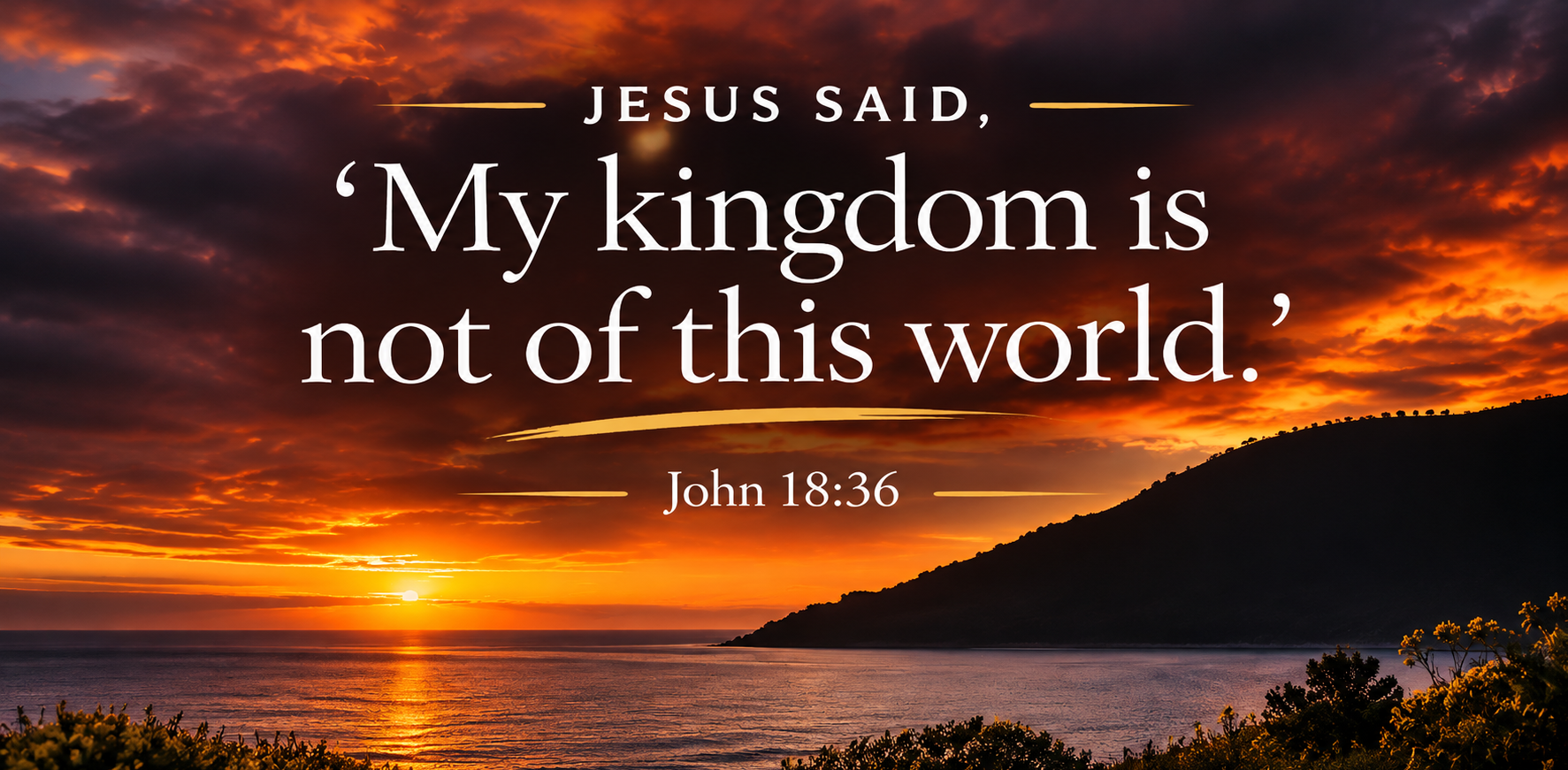
One of the most important statements Jesus ever made was in John 18:36: "My kingdom is not of this world." Jesus did not come to establish an earthly empire. His Kingdom is not built through worldly power, personal status, financial empires or the promotion of human greatness. Yet how often do we measure the success of the Church by buildings, attendance figures, social media followers, financial achievements and the influence of prominent personalities?
These things may have their place, but they are not the measure of faithfulness to Christ. The Kingdom of God is about righteousness, peace and joy in the Holy Spirit (Romans 14:17). It is about hearts transformed by the Gospel. It is about loving our neighbours, serving one another, caring for the vulnerable, forgiving those who hurt us and walking in obedience to Christ.
It is about becoming more like Jesus, not becoming more recognisable ourselves.
We are living in days when the Gospel matters more than ever
Jesus spoke about the signs of the times and warned His disciples to remain watchful (Matthew 24). He spoke of deception, lawlessness, persecution and the need to endure in faith. In Matthew 24:14, Jesus declared that the Gospel of the Kingdom would be preached throughout the world as a testimony to all nations, and then the end would come. We do not know the day or the hour of His return (Matthew 24:36).
We are not called to manufacture dates, create fear or make predictions that Scripture does not give us. We are called to remain faithful, watchful and obedient. And yet, while we debate, compete and build our own religious structures, there are people who have never heard the true message of salvation.
There are broken people who need hope. There are families who need the love of Christ demonstrated to them. There are people searching for truth. They do not need another performance from a stage. They need believers who will walk beside them, love them, share the truth with them and demonstrate the character of Christ in everyday life.
The Great Commission was never limited to a church service or a pulpit. It is a calling that reaches into our homes, workplaces, communities and every corner of the world.
A Church that returns to its first love
Perhaps what we need today is not another movement, another religious identity or another platform. Perhaps what we desperately need is a Church that remembers its first love. In Revelation 2:4 – 5, Jesus addressed the church in Ephesus because they had abandoned the love they had at first. Despite their works and perseverance, something essential had been lost.
That is a warning worth taking seriously. We can be busy and still miss the heart of Christ. We can know religious language and still fail to demonstrate His love. We can defend doctrines and still fail to live out the very Gospel we proclaim.
The answer is not to abandon sound doctrine. It is to return to the Word, to Christ and to the love that should characterise His followers. And perhaps this is why so many believers are questioning the institutional Church, searching the Scriptures for themselves and longing for something more authentic.
Some are stepping away from church structures, not necessarily away from Christ.
But we must remember that the answer is not isolation either.
Scripture calls believers to gather, encourage one another, share fellowship and not neglect meeting together (Hebrews 10:24–25). We need one another. We need the body of Christ. We need biblical fellowship, accountability, sound teaching and genuine love. We need a Church that points people to Jesus rather than to itself.
Let us return to the Great Commission
Jesus gave us a commission. It was not the commission to build our own kingdoms. It was not the commission to establish our own fame, create competing religious identities or make disciples of our own personalities. It was the Great Commission.
Go. Make disciples. Baptise them in the name of the Father, the Son and the Holy Spirit.
Teach them to obey everything Jesus commanded. Encourage one another. Love one another.
Carry one another's burdens. Preach the Gospel. Make Christ known.
The world does not need more of us. It needs more of Jesus. And if we truly understand the Gospel, our greatest desire will not be to have people follow our names, our movements or our ministries. It will be to see people come to know Jesus Christ, surrender their lives to Him and become faithful disciples.
The Church belongs to Christ.
The Gospel belongs to Christ. The Kingdom belongs to Christ. And the glory belongs to Christ alone.S
So let us return to the message the apostles preached, the message the early Church carried and the message Jesus commanded us to proclaim.
Not our kingdom. Not our name. Not our movement.
Jesus Christ. Crucified. Risen. Coming again.
Stella Ashworth - Bay Talk @ 2026