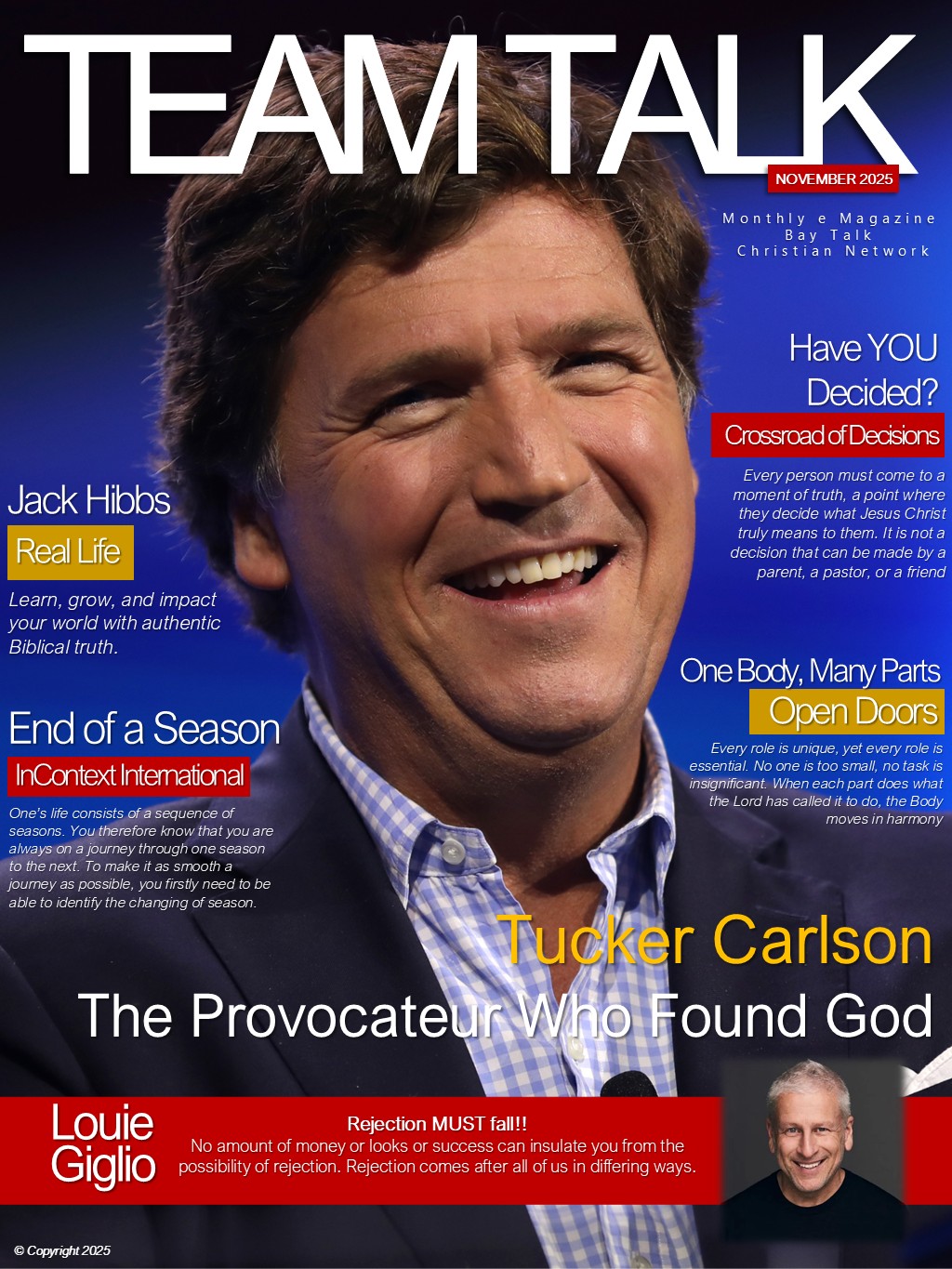

Tucker Carlson: The Provocateur Who Found God by stella ashworth
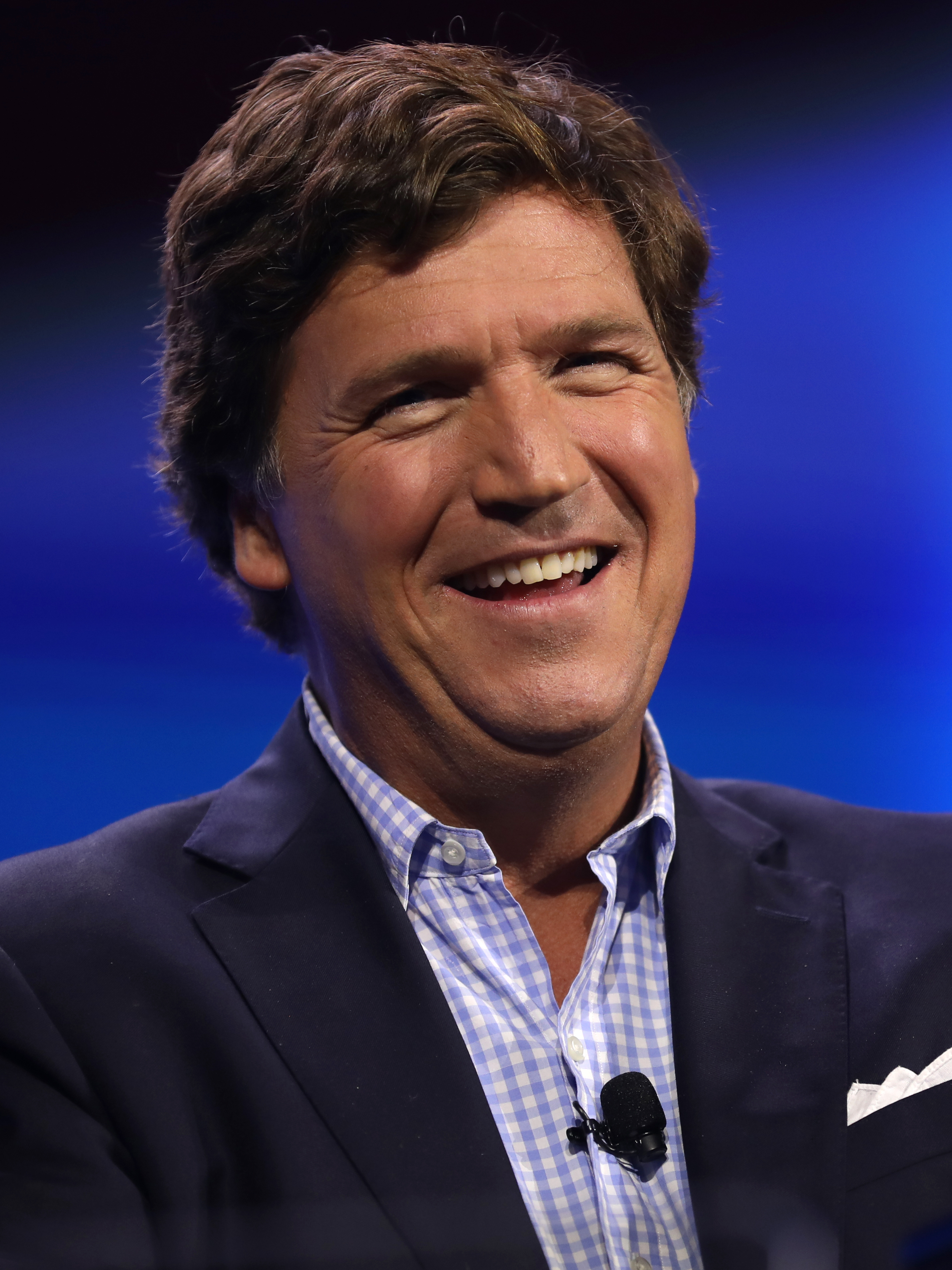
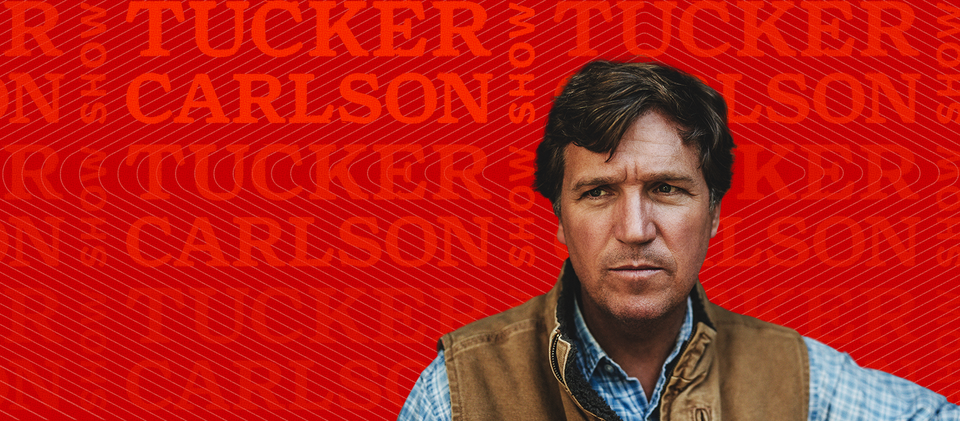
Tucker Carlson has been, for two decades, one of America’s most combustible media figures: a partisan lightning rod, a best-selling author, a rural recluse turned online powerhouse, and in recent years, an increasingly public voice about faith and the need for spiritual revival.
Whether you admire him, loathe him, or are still trying to figure him out, Carlson’s trajectory says something important about the interplay of religion, media, and politics in 21st-century America.
From Washington insider to cultural outsider
Carlson’s career arc is familiar to anyone who follows cable and digital media. He spent years in Washington and in television, rose to national prominence on Fox News, and after his departure there built a new platform that reaches millions online. His persona blends old-school conservative grievance, caustic cultural commentary, and an appeal to ordinary, often religious, Americans who feel neglected by elites. That reinvention from cable host to independent media figure has been chronicled across major outlets.
The Christian language Carlson now uses
Over the last 18–24 months Carlson has leaned more openly into religious language. He has spoken about a “revival” he sees in America, regularly invites Christian thinkers and clergy onto his programs, and, in interviews and long-form conversations, describes a spiritual restlessness in the country that politics alone cannot fix.
He has joked about being an Episcopalian by background, but in public forums he increasingly frames national problems in moral and theological terms, urging repentance and pointing listeners toward the need for spiritual renewal. A representative line that captures this shift: Carlson has been reported to say that the only real hope for national unity is “spiritual revival” language that moves him from the purely political to the explicitly spiritual.
Friendship with Charlie Kirk — loyalty, politics, and grief
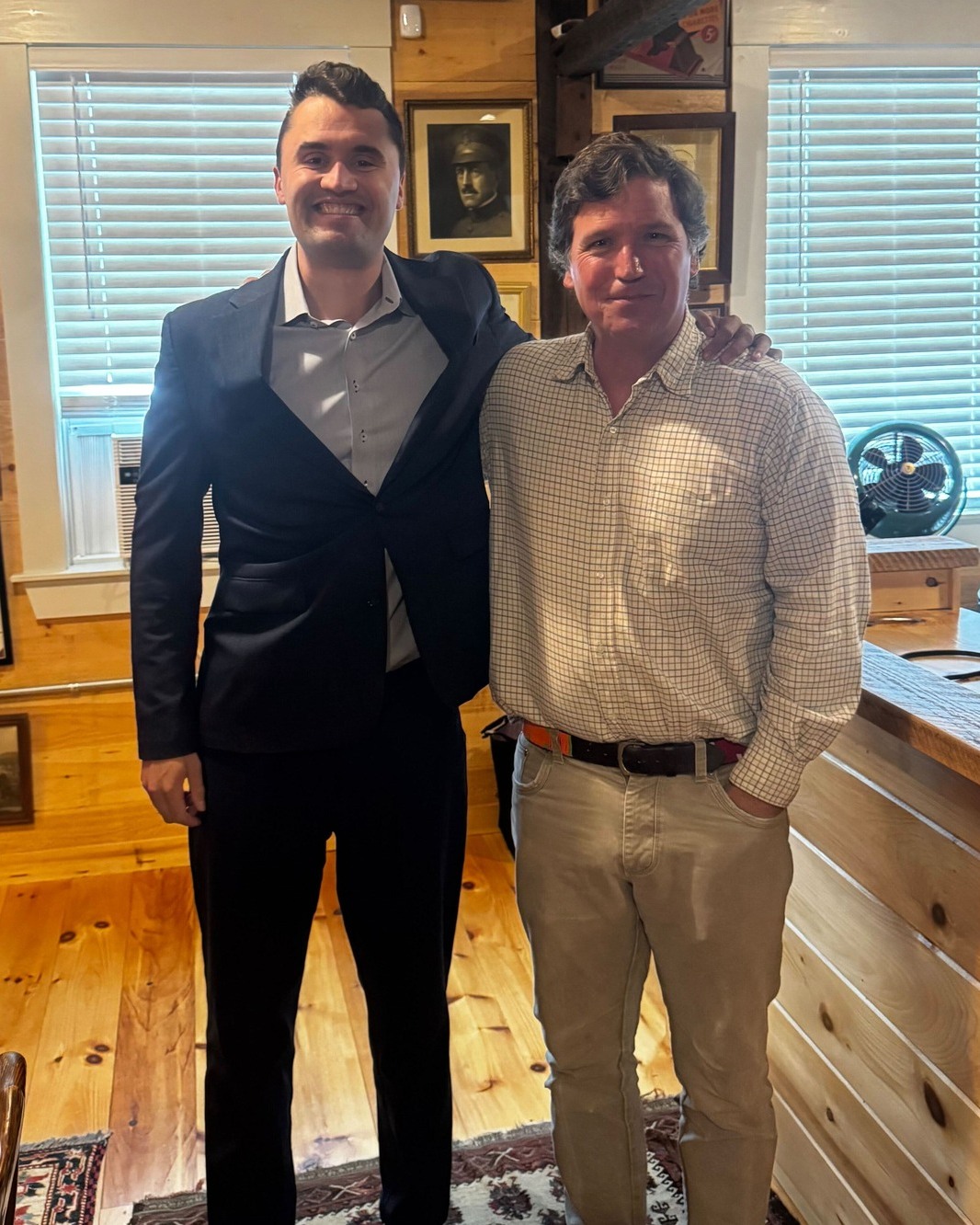
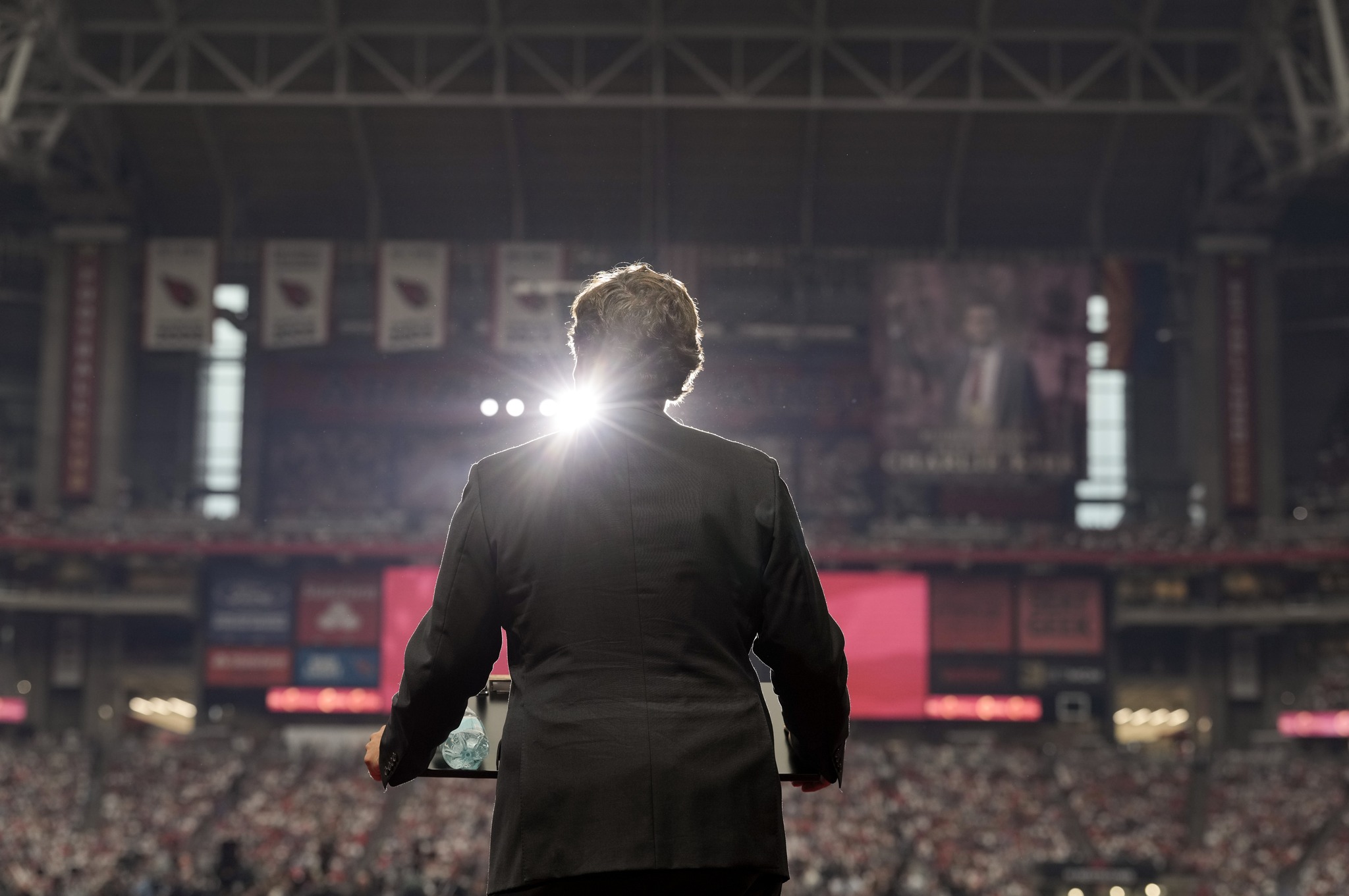
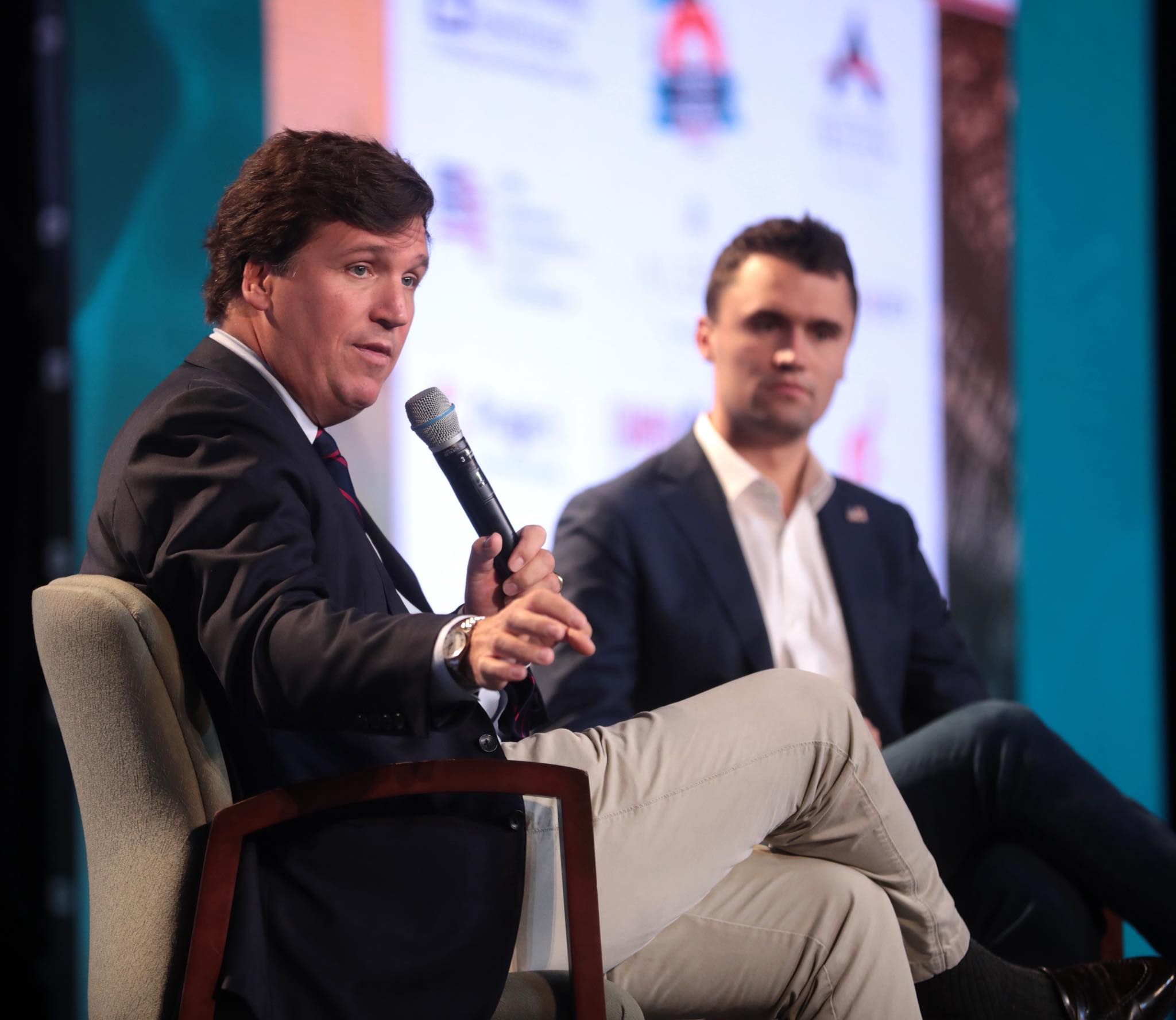
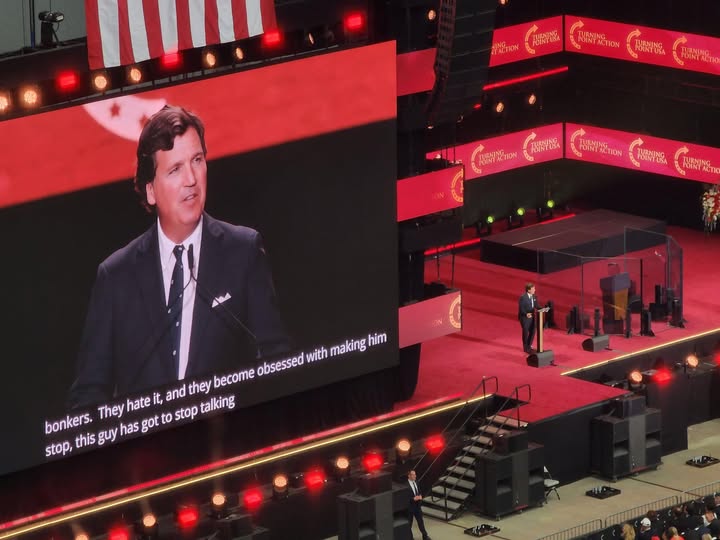
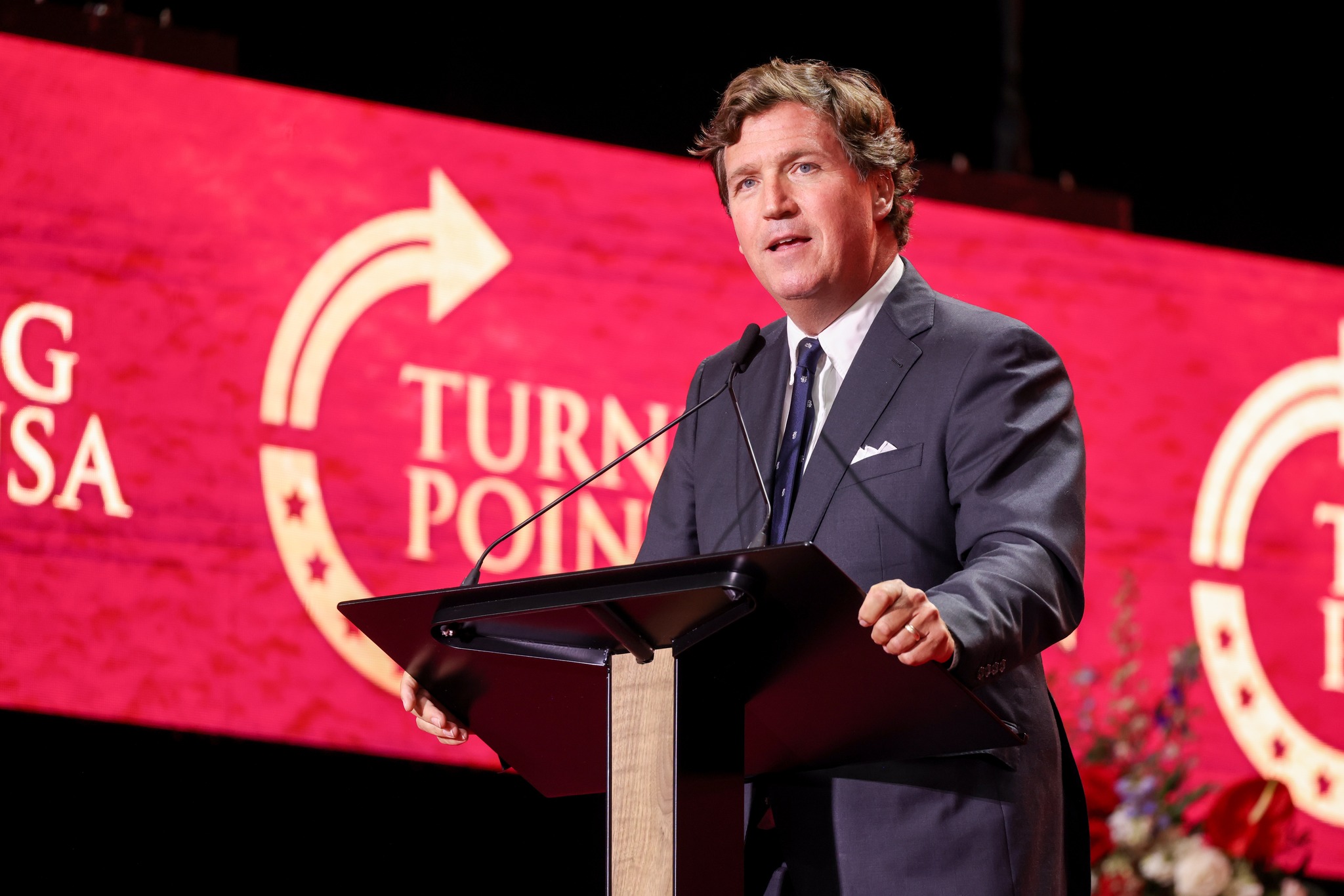
Carlson and Charlie Kirk, the conservative activist who founded Turning Point USA, had a well-known public friendship rooted in shared political priorities and media alliances. When Kirk was killed, the public spectacle of grief and tribute that followed became a focal point for national conversation. Carlson’s presence at Kirk’s memorial, and his remarks there , were soaked in remarks there , were soaked in religious imagery and urgent moral claims. He used the platform to insist that political agendas, however important, are subordinate to a deeper spiritual remedy: the gospel. Multiple reports and full recordings of the address show Carlson urging repentance and calling Jesus, rather than mere ideology, “the solution” to America’s ills.
That speech sparked fierce debate. Some listeners and commentators praised Carlson’s turn to explicit Christian language and his call for repentance; others criticized lines in the address as inflammatory or historically problematic. Jewish organizations and other observers expressed alarm at certain metaphors Carlson used, calling parts of the speech irresponsible or hurtful given the audience’s political and religious sensitivities.
The controversy underlines how quickly religious rhetoric, particularly when delivered in large public forums infused with political meaning, can ignite both consolation and condemnation.
What Carlson says about Christianity — sincere faith, rhetorical strategy, or both?
Parsing Carlson’s personal faith from his public rhetoric is tricky. He has described encounters and conversations that suggest a genuine spiritual curiosity and has interviewed respected religious figures (for example, bishops and theologians) in ways that treat faith as central to civic repair. At the same time, Carlson is a consummate rhetorical technician: he knows which images and phrases mobilize his audience.
For some critics, his religious language appears instrumental, a way of sacralizing political aims. For supporters, it reads as an authentic conversion of priorities, where politics follows moral and spiritual truth. Both interpretations have evidence in Carlson’s public record. His written work and on-air commentary also contain lines that have become widely quoted: for instance, Carlson has argued that “countries can survive war and famine; they cannot survive leaders who despise their own people,” and he has repeatedly emphasized free speech as primary among civil liberties.
These lines show a fusion of moral urgency and civic argument, a blend that helps explain why his Christian inflections matter.
The power and peril of mixing pulpit and podium
Carlson’s recent turn toward explicitly Christian speech, especially at a mass memorial, exposes the double edge of mixing religious language with political spectacle. On one hand, framing national crisis in moral and spiritual terms can open a space for repentance, reconciliation, and moral seriousness that partisan sloganeering seldom achieves.
On the other, religious rhetoric, when joined to political grievance, can intensify wounds, harden group identities, and risk alienating exactly those communities religious appeals are meant to heal. The responses to Carlson’s memorial remarks show both dynamics in real time.
A complicated legacy in the making
Tucker Carlson today is less easily categorized than at many points in his career. He remains an agitator and a culture warrior; he is also, increasingly, a public witness invoking Christian themes. Whether that witness is received as pastoral, political, sincere, or strategic depends largely on the listener and on how Carlson himself continues to balance theology and polemic.
Whatever your view of him, his evolution matters because it reflects a broader movement: the re-sacralization of public discourse among large swaths of Americans who no longer separate the spiritual and the civic.
In Tucker’s own words
“Free speech is the main right that you have. Without it, you have no others.”
“Countries can survive war and famine and disease. They cannot survive leaders who despise their own people.” from Ship of Fools.
On revival: Carlson has said publicly that “spiritual revival” is the only realistic hope to avoid national fracture, language he’s used in speeches and social posts. Tucker Carlson’s recent public posture, a mixture of trenchant political critique and explicit religious appeal, forces a question that reaches beyond any one man: can public leaders honestly call a nation to repentance without being consumed by the very politics they denounce? Carlson’s answer so far seems to be: yes, he believes the politics must follow the spirit. How history records that answer will depend on events still to come, and on whether spiritual language in public life heals or deepens the country’s divides.
Resources & further reading
Wall Street Journal — “Inside the Strange New World of Tucker Carlson.” The Guardian live coverage of the Charlie Kirk memorial. The Catholic Herald YouTube — Full videos/transcripts of Tucker Carlson’s remarks at Charlie Kirk’s memorial (recordings from the memorial event). Bishop Robert Barron interview coverage (Catholic World Report) — on Carlson and faith conversations.
Article by Stella Ashworth for Team Talk Magazine.